

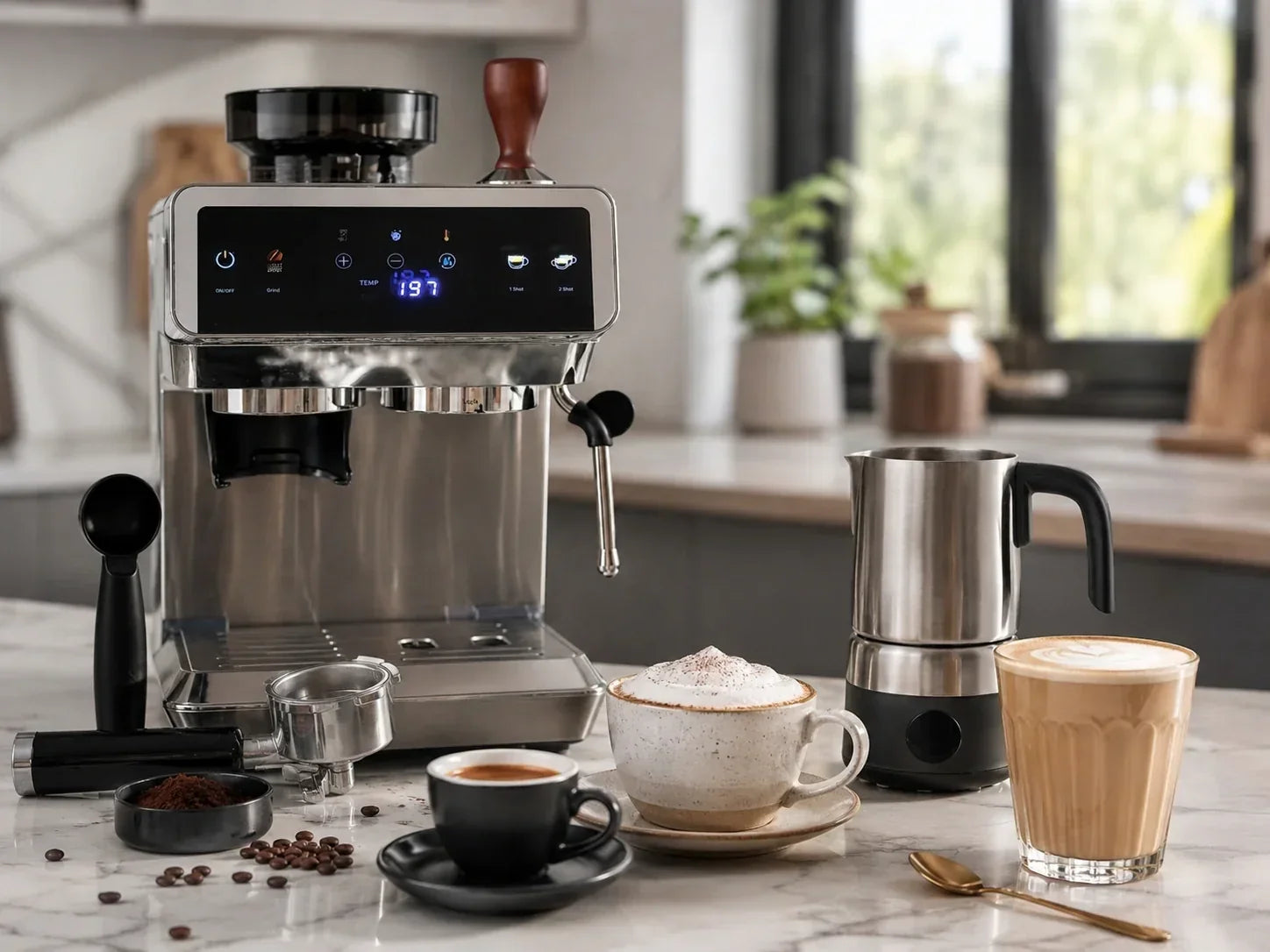
Espresso, cappuccino, and latte all begin with espresso, yet the drinks feel completely different in the cup. Espresso is small and concentrated. A cappuccino balances coffee, warm milk, and airy foam. A latte uses more milk and only a thin layer of foam, so it tastes softer and creamier.
If a coffee shop menu has ever felt more complicated than it should, this guide gives you the useful differences without the jargon.
The Short Answer
| Drink | Coffee Base | Steamed Milk | Foam | Taste |
|---|---|---|---|---|
| Espresso | 1 double shot | None | Natural crema only | Concentrated and bold |
| Cappuccino | 1 double shot | About 3–4 oz | A generous, airy layer | Coffee-forward with a light texture |
| Latte | 1 double shot | About 6–8 oz | A thin, silky layer | Mild, creamy, and smooth |
Quick note: These are practical starting ratios, not strict rules. Exact proportions may vary depending on cup size, café style, and the number of espresso shots used.
These are useful starting ratios, not strict laws. Cup size and café style vary, and some shops use one shot while others use two. The most important difference is the balance between espresso, milk, and foam.
What Is Espresso?

Espresso is concentrated coffee brewed by pushing hot water through a compact bed of finely ground coffee. It is served in a small cup and can be enjoyed on its own or used as the base for dozens of milk drinks.
A practical starting recipe for a double espresso is 18 grams of ground coffee in and about 36 grams of espresso out. That is a 1:2 brew ratio. Many home baristas aim for roughly 25 to 30 seconds, then adjust the grind based on how the shot tastes.
Good espresso should have sweetness, pleasant acidity, and a full body. It should not taste sharply sour, harshly bitter, or watery. If your shot is not balanced yet, see our guide to dialing in espresso at home after it is published.
What Is a Cappuccino?

A cappuccino combines espresso with steamed milk and a noticeable cap of foam. The familiar "one-third espresso, one-third milk, one-third foam" rule is a convenient visual guide, although modern cappuccinos are often made with a double shot and a more blended layer of microfoam.
The result should still taste clearly like coffee. The milk adds sweetness and softens the espresso, while the foam makes each sip feel lighter.
A Simple Home Cappuccino Recipe
1. Brew one double espresso into a 5- to 6-ounce cup.
2. Froth 3 to 4 ounces of cold milk until it has a smooth, airy texture.
3. Pour the warm milk into the espresso, then finish with a thicker layer of foam.
4. Serve immediately, before the milk and foam begin to separate.
Whole milk is the easiest place to start, but barista-style oat or soy milk can also work. The exact result depends more on the milk formula and frothing method than on whether the milk is dairy or plant-based.
What Is a Latte?

A latte uses espresso, plenty of steamed milk, and a thin layer of silky microfoam. Because the milk-to-coffee ratio is higher, a latte tastes gentler than a cappuccino. It is also a good base for vanilla, caramel, maple, or seasonal flavors.
A Simple Home Latte Recipe
1. Brew one double espresso into an 8- to 12-ounce cup.
2. Steam or froth 6 to 8 ounces of cold milk.
3. Swirl the milk to blend the liquid and microfoam.
4. Pour steadily into the espresso, leaving only a thin foam layer on top.
For a latte, aim for milk that looks glossy and pourable rather than stiff. Large dry bubbles sit on top of the drink; fine microfoam blends into the espresso and creates a smoother texture.
Latte vs. Cappuccino: Which One Has More Caffeine?
If both drinks use the same number of espresso shots, they contain roughly the same amount of caffeine. A latte is larger because it has more milk, not necessarily more coffee. Always check the number of shots when comparing café drinks, since a large latte may contain more espresso than a small cappuccino.

Which Drink Should You Choose?
• Choose espresso if you want to taste the coffee with no milk covering its character.
• Choose a cappuccino if you want a clear espresso flavor with a light, foamy texture.
• Choose a latte if you prefer a mild, creamy drink or want to add flavored syrup.
• Choose an iced latte if you like the latte balance but want a colder, more refreshing drink.
The Easiest Home Setup
For all three drinks, consistency matters more than a complicated counter full of tools. You need an espresso machine, a grinder that can make small adjustments, fresh coffee, a scale, and a way to texture milk.
The AMZCHEF Espresso Machine With Grinder combines a built-in grinder with 44 grind settings and adjustable brewing temperature, so you can move from whole beans to espresso without switching between separate appliances. For cold foam or automatic hot froth, the AMZCHEF 8-in-1 Milk Frother adds a hands-off option for milk drinks.
Frequently Asked Questions
Is a flat white the same as a latte?
No. A flat white usually has less milk and a thinner layer of microfoam, so the espresso flavor is more noticeable. A latte is generally larger and milkier.
Is a macchiato the same as a cappuccino?
No. A traditional espresso macchiato is espresso "marked" with a small amount of milk or foam. It is much smaller and stronger than a cappuccino.
Can I make a latte without an espresso machine?
Yes. Strong coffee from a moka pot or an AeroPress can make a satisfying milk drink, although it will not have exactly the same concentration and texture as espresso.
What milk makes the best cappuccino foam?
Cold whole milk is forgiving and produces a rich texture. For plant-based drinks, look for a barista-style oat or soy milk designed to foam. Different brands behave differently, so a small amount of testing is normal.
Should I pour espresso or milk first?
For a latte or cappuccino, brew the espresso first and pour the textured milk into it. For layered iced drinks, the order can change depending on the look and flavor you want.
Espresso, cappuccino, and latte are not competing drinks. They are three different ways to enjoy the same foundation. Start with a balanced espresso, change the amount and texture of the milk, and you can make all three at home.