

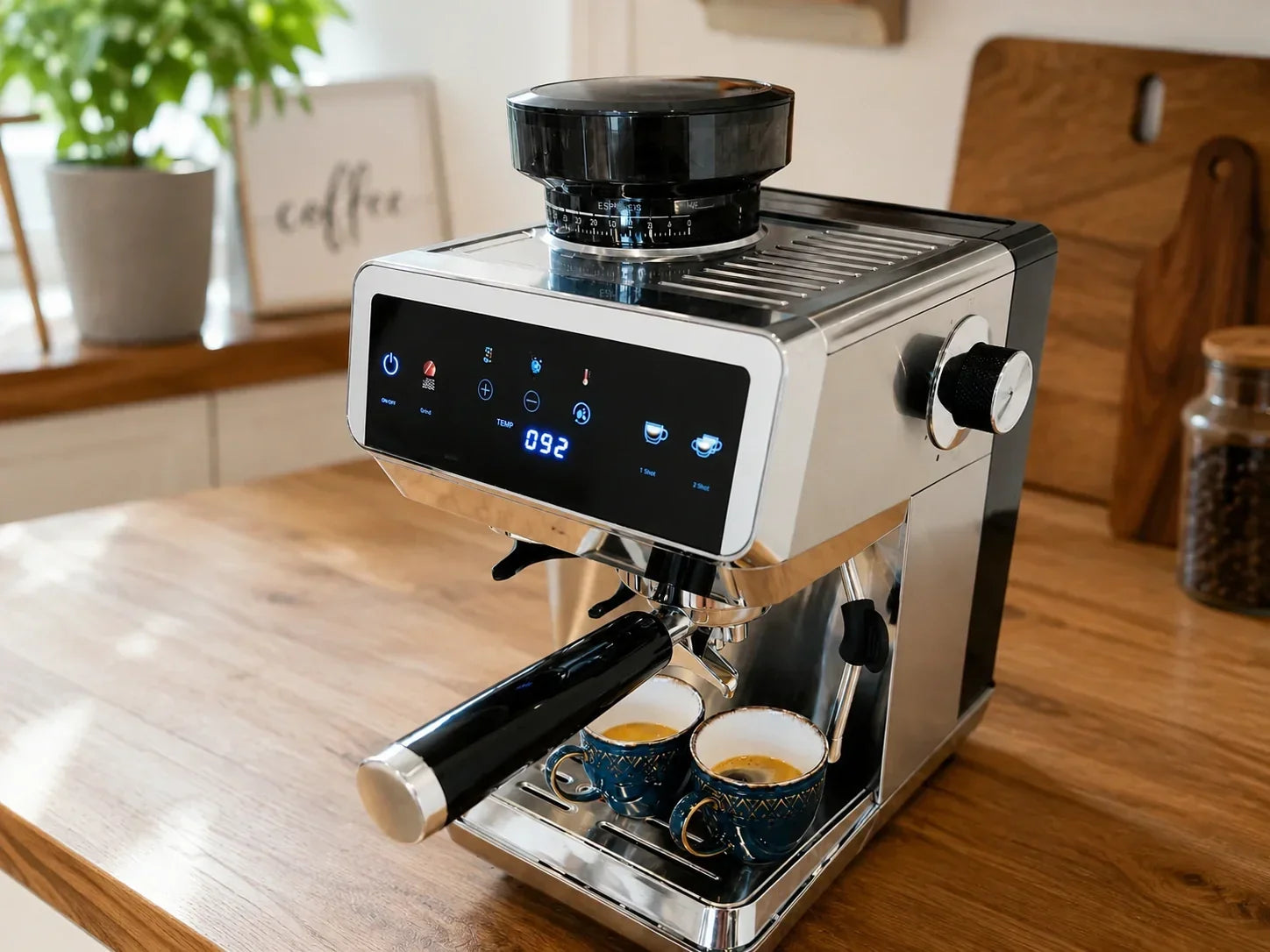
Sour and bitter are the two most common complaints in home espresso, but they usually point in opposite directions. A sharp, thin, lemon-like shot is often under-extracted. A dry, harsh, lingering shot is often over-extracted. The fix is not more syrup. It is a small, controlled change to the way the coffee is ground or brewed.
Start by writing down your dose, yield, and shot time. Without those three numbers, it is easy to change several things at once and never learn which adjustment helped.

Sour, Bitter, or Simply Strong?
Before changing the grinder, make sure you are naming the taste correctly.
• Sour feels sharp and immediate, sometimes like an unripe citrus fruit. The shot may also feel thin or salty.
• Bitter lingers at the back of the tongue and may taste burnt, woody, or medicinal.
• Astringent feels drying, similar to over-steeped tea. It often appears with channeling or an overly long extraction.
• Strong describes concentration, not necessarily a defect. A balanced espresso can taste intense without being unpleasant.
Coffee naturally contains acidity and bitterness. The goal is not to remove both. The goal is to balance them with sweetness, aroma, and body.
Quick Espresso Troubleshooting Chart
| What You Notice | Likely Cause | First Change to Try |
|---|---|---|
| Sour, thin, fast shot | Grind too coarse | Grind slightly finer |
| Bitter, dry, slow shot | Grind too fine | Grind slightly coarser |
| Sour and bitter in the same cup | Uneven flow or channeling | Improve distribution and tamp level |
| Watery with weak crema | Low dose, stale beans, or fast flow | Confirm the basket dose and grind finer |
| Burnt taste at a normal shot time | Water too hot or dirty equipment | Lower the temperature or clean the brew path |
| Good first sip, harsh finish | Yield too high | Stop the shot sooner |
Start here: Change only one variable at a time. Begin with the grind size, pull another shot, and taste again before adjusting the dose, yield, or temperature.
1. Start With a Repeatable Recipe
Use the basket size specified for your machine. If your double basket is designed around 18 grams, begin with 18 grams of dry coffee and aim for about 36 grams of espresso in the cup. That is a 1:2 ratio.
Treat 25 to 30 seconds as a useful starting window, not a pass-or-fail rule. Taste decides whether the shot is finished. The numbers simply help you repeat or diagnose the result.

2. If the Espresso Is Sour, Grind Finer
A coarse grind lets water pass through the puck too quickly. The water takes the easiest soluble flavors first, but it may leave behind much of the sweetness and body that would balance the acidity.
Move one or two small settings finer, keep the dose and target yield the same, and pull another shot. Large grinder changes can take you from a fast sour shot to a machine that barely flows, so adjust gradually.
3. If the Espresso Is Bitter, Grind Coarser
An overly fine grind creates more resistance and can keep the water in contact with the coffee for too long. The shot may drip slowly, taste dry, and leave a harsh finish.
Move slightly coarser and repeat the shot with the same dose and yield. If the taste improves but is still too intense, try ending the shot a few grams sooner rather than changing everything again.
4. Check the Yield, Not Just the Clock
Shot time only means something when you also know how much espresso reached the cup. An 18-gram dose that produces 36 grams in 28 seconds is different from one that produces 60 grams in the same time.
Place a scale under the cup and stop at a planned yield. If the espresso tastes bitter near a 1:2 ratio, a slightly shorter yield may help. If it tastes sour even after the grind is close, a slightly longer yield can increase extraction. Make small changes and keep notes.
5. Adjust Temperature for the Roast
Lighter roasts are often harder to extract and may taste sharp when brewed too cool. Darker roasts release flavor more easily and can become bitter when the water is too hot.
If grind and ratio are already close, try a modest temperature change. Raise the temperature slightly for a stubborn light roast. Lower it slightly for a dark roast that tastes harsh. The AMZCHEF CM1626 offers adjustable brewing temperature from 190°F to 201°F, which makes this kind of fine-tuning easier.
6. Fix Uneven Puck Preparation
If one part of the puck is dense and another part is loose, water finds the weak path. Some coffee is under-extracted while the coffee near the channel can become over-extracted. That is why one cup may taste sour and bitter at the same time.
Before tamping, spread the grounds evenly across the basket. Break up visible clumps, keep the portafilter level, and press straight down with consistent pressure. A level tamp matters more than trying to tamp as hard as possible.
7. Use Fresh, Suitable Beans
Very old beans can produce flat, weak espresso with little aroma. Beans that are extremely fresh may release enough gas to make the shot behave unpredictably. A roast date is more useful than a distant expiration date.
Choose whole beans, store them in a sealed container away from heat and light, and grind only what you need. If you are still choosing a roast, see our guide to choosing coffee beans by origin and roast.
8. Clean the Parts That Touch Coffee
Old coffee oils can add a stale, bitter taste even when the shot time looks perfect. Rinse the basket and portafilter after use, wipe the group area according to the machine manual, and keep the grinder chute free of old grounds.
For a practical schedule, read How Often Should You Actually Clean Your Coffee Grinder?.
The Best Order for Fixing a Bad Shot
1. Confirm the dose matches the basket.
2. Set a target yield, such as a 1:2 ratio.
3. Pull a shot and record the time.
4. Change only the grind until the flow is close.
5. Taste and refine the yield.
6. Adjust temperature only after the main recipe is stable.
7. Check distribution, tamping, freshness, and cleanliness if the result is still inconsistent.
Frequently Asked Questions
Why is my espresso sour even when the shot time is 30 seconds?
Time alone does not guarantee balanced extraction. Check the dose and yield, then consider channeling, low temperature, or a light roast that needs a slightly longer ratio.
Why does my espresso taste both sour and bitter?
Uneven extraction is the most likely reason. Improve the distribution of grounds, tamp level, and make sure the basket is dry and clean before dosing.
Does more pressure make espresso less sour?
Not by itself. Grind size, dose, yield, temperature, and even puck preparation have a more useful role in daily adjustment. A higher pump-pressure number on the box is not a shortcut to a balanced cup.
Can milk hide bad espresso?
Milk can soften acidity and bitterness, but a balanced base still makes a better latte or cappuccino. Fixing the shot also lets you use less syrup to cover harsh flavors.
Should I change the dose or grind first?
Keep the dose appropriate for the basket and change the grind first. Holding the dose steady makes the result easier to understand.
The fastest route to better espresso is a boring one: change one variable, record the result, and taste again. Once you can repeat a basic recipe, sour and bitter shots stop feeling random.